


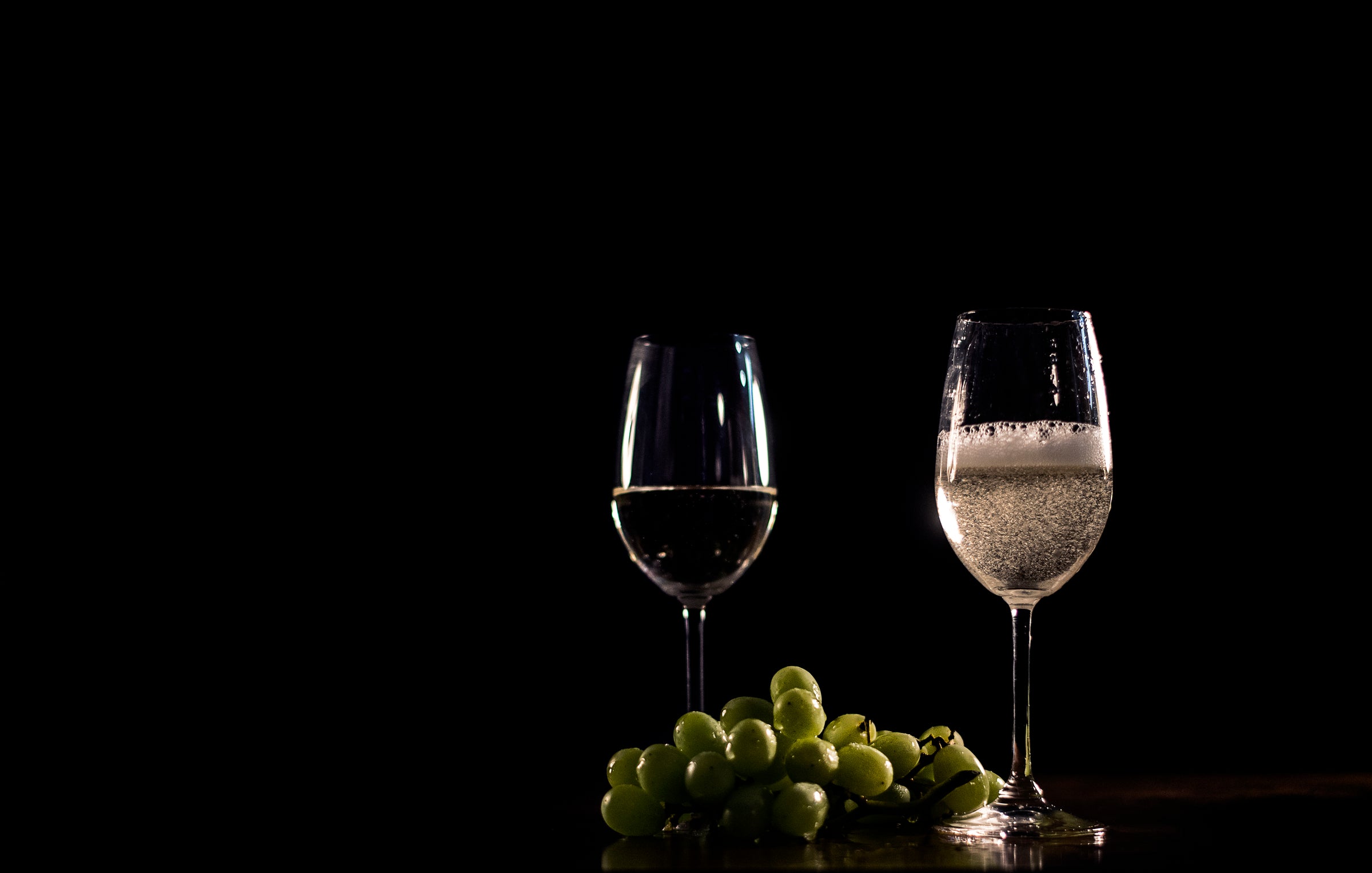
Understanding the production of Champagne and certain Crémants: a French art of excellence
From vine to flute, the production of Champagne and Crémant requires true expertise. Behind every bubble lies meticulous work, inherited from centuries of tradition and perpetuated by passionate artisans.
But what are the key steps in this unique production process? And above all, what distinguishes Champagne from its sparkling cousins, Crémants ?
Let's delve into the secrets behind the making of these exceptional sparkling wines. 🍾
1. Exceptional terroirs
Champagne: a unique appellation
Champagne can only be produced in the eponymous region in northeastern France.
Its limestone terroir, cool climate and chalky subsoil give the wine an incomparable minerality and finesse .
The main grape varieties used are:
-
Chardonnay (elegance and freshness)
-
Pinot Noir (structure and power)
-
Pinot Meunier (fruity and round)
Crémants: from diverse and expressive terroirs
Crémants are produced in several French regions, each bringing its own personality:
-
Crémant d'Alsace
-
Crémant de Bourgogne
-
Crémant de Loire
-
Crémant de Bordeaux
-
Crémant du Jura, etc.
Each terroir and each grape variety (Chenin, Aligoté, Pinot Gris, etc.) gives a unique taste identity to these sparkling wines.
2. Winemaking: the secret of natural bubbles
Step 1: The grape harvest
The grapes intended for sparkling wines are harvested manually , in order to preserve the whole berries and avoid any oxidation.
An earlier harvest helps to preserve a good natural acidity , essential for a balanced wine.
Step 2: The first fermentation
The grape juice (must) ferments once to become a still wine (without bubbles).
This base wine will then be used to create the effervescence.
Step 3: Assembly
This is the most artistic stage: the cellar master blends different wines from various grape varieties, terroirs or years to obtain a harmonious and consistent taste from year to year.
It is this signature that distinguishes each house or estate.
Step 4: Second fermentation in the bottle (traditional method)
The secret of the bubbles lies in this second fermentation , called the taking of the foam .
A “liqueur de tirage” (a mixture of wine, sugar and yeast) is added to the base wine before it is hermetically sealed.
The yeast transforms the sugar into alcohol and carbon dioxide — and the bubbles are born! 💫
Step 5: Aging on lees
The bottles then rest on their lees (dead yeasts) for several months, or even several years.
This is what gives the wine its aromatic complexity : notes of brioche, hazelnut, dried fruit…
Step 6: Riddling and disgorging
Once the aging process is complete, the bottles are stirred to concentrate the sediment in the neck, then disgorged (the lees are expelled).
A “shipping liqueur” (wine + sugar) is added to define the final style: brut, demi-sec, extra-brut, etc.
3. Champagne vs Crémant: what are the differences?
| Criteria | Champagne | Crémant |
|---|---|---|
| Region | Exclusively in Champagne | Several regions (Alsace, Loire, Burgundy…) |
| Method | Champagne method (traditional) | Traditional method (identical in principle) |
| Minimum aging on lees | 15 months (36 for a vintage) | minimum 9 months |
| Average price | Higher (prestige, terroir) | More accessible |
| Taste profile | Complex, long, mineral | Fruity, fresh, expressive |
Dare to try half-bottle wine!